
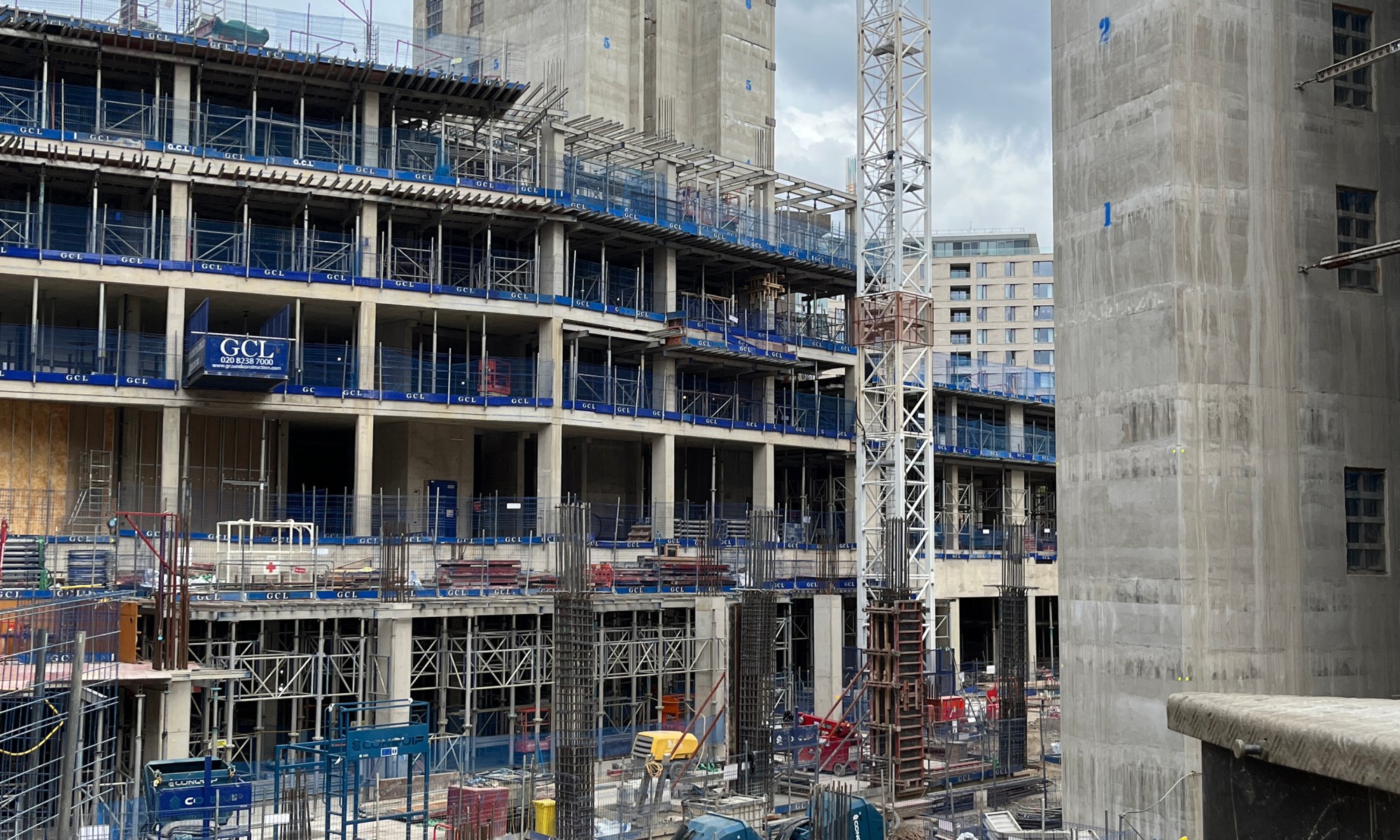
Camden Council continues to grant planning permission for schemes which result in huge amounts of carbon emissions from their construction, many including carbon-intensive basements.
In June 2025 Climate Emergency Camden submitted a response to the London Plan consultation with highlights the failure of planning policy to reduce the carbon intensity of construction. We are particularly concerned about:
- the prioritisation of ‘growth’ for its own sake
- the lack of a strategy based on evidence
- lack of hard targets for restraining harmful outcomes and for operating within planetary boundaries.
Our full submission can been read at this link.
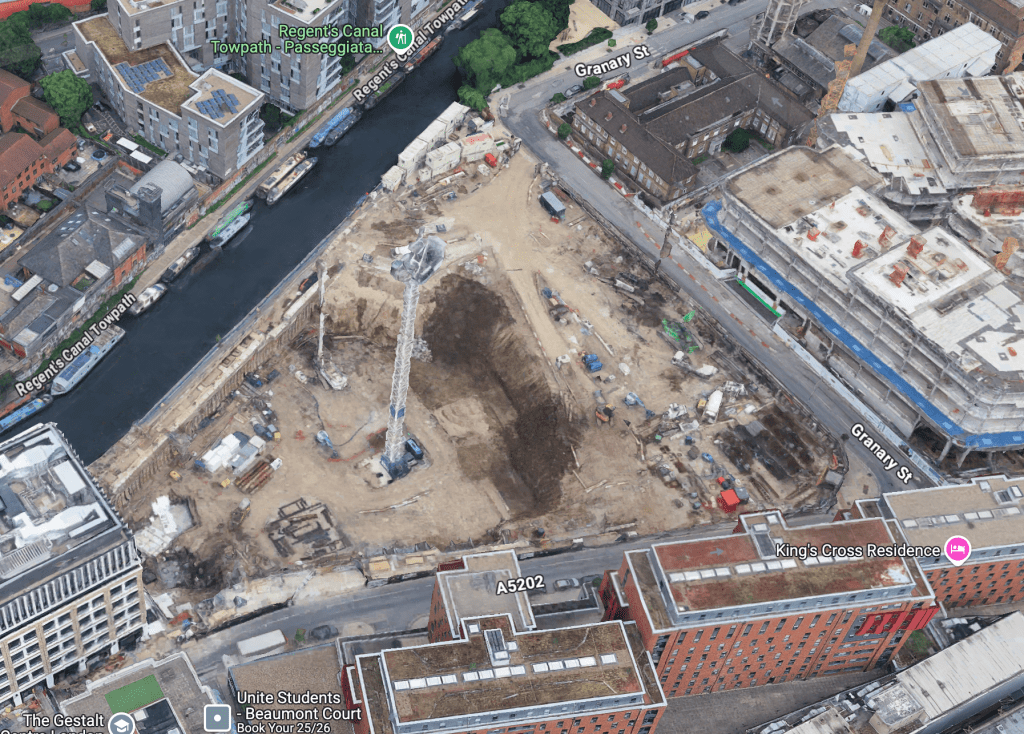
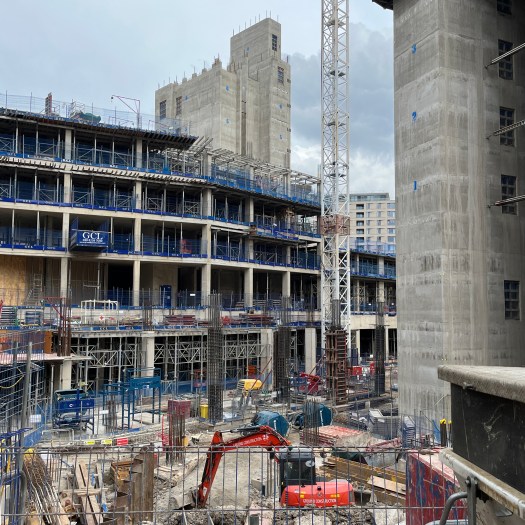
An example of this is the development at 2-6 St. Pancras Way, which was granted permission without the applicant having submitted a Whole Life Carbon Assessment, despite the fact that the GLA said that this was required.
.
POSTSCRIPT:
On 18th October 2025 Climate Emergency Camden wrote to the Camden planning department as follows:
We are writing in respect of the planning process for the redevelopment of 2-6 St Pancras Way, ref. 2021/2671/P.
The GLA’s Stage 1 report quite clearly stated that the developer was required to submit a Whole Life Carbon assessment, see clause 61:
“Under London Plan Policy SI2, the applicant is required to submit a Whole Life-Cycle Carbon (WLC) assessment. However, no such assessment has been submitted. All applicants are expected to submit a completed WLC assessment template (as an Excel document, not a PDF) and follow the GLA WLC guidance; both of which are available here: https://www.london.gov.uk/what-we-do/planning/implementing-london-plan/london-plan-guidance-and-spgs/whole-life-cycle-carbon-assessments-guidance-consultation-draft. Further advice on what is expected has been provided to the Council and applicant under separate cover.
The GLA also said in clause 62:
“The Council should secure via condition the submission of a post-construction assessment to report on the development’s actual WLC emissions.”
This was summarised in clause 69:
“Sustainable development: Further information on energy, urban greening and drainage is required. The applicant must submit a whole-life cycle carbon assessment and a circular economy statement.”
Despite this, the applicant did not submit a a whole-life cycle carbon assessment prior to the planning decision being made.
In the Planning Committee Report, the officer states in clause 17.15: “Under the London Plan Policy S12, the application is required to be accompanied by a Whole Life Carbon Assessment. This has been assessed by the GLA within their stage 1 report and recommend a condition to require the submission of a post construction assessment to report on the developments actual Whole Life Cycles emissions.”
The GLA’s Stage 2 report (30 May 2022) states that:
“33. A whole life cycle carbon assessment had not been submitted at application stage in accordance with London Plan Policy SI2. One has since been provided which has been reviewed and formal comments issued. Matters raised related to inadequate justification for WLC benchmarks not being reached; updating the assessment 1 and 2 template tables; identify potential further opportunities to reduce WLC carbon emissions; and more information on materials types and quantities. The assessment had been subsequently updated and now fully addresses all issues raised. As such, the proposals comply with SI2 of the London Plan.”
Do you have a copy of the the WLC assessment referred to by the GLA? If so, can you please send it to us, and upload it onto Camden’s planning website.
On 24th August 2026, Camden finally uploaded the Whole Life Carbon assessment to their statutory register file. The planning officer confirmed that this had never been received from GLA, together with the GLA’s stage 2 report.
The WLC assessment states that gives the CO2e emissions for the up-front construction as 326kgCO2e/m2, which is too low to be credible.
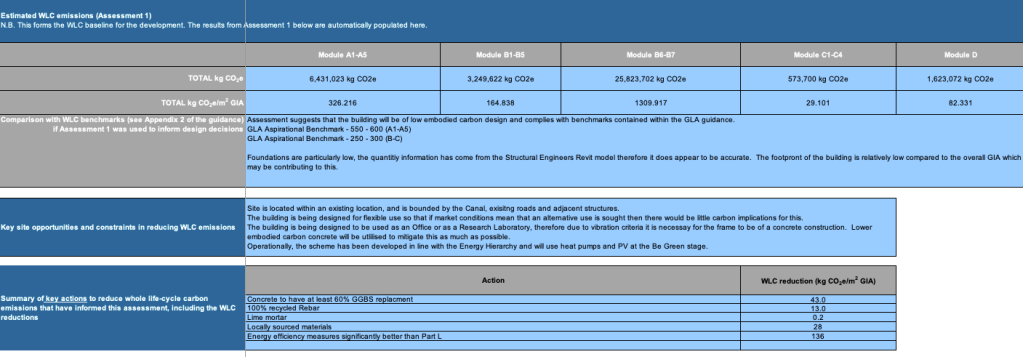
.
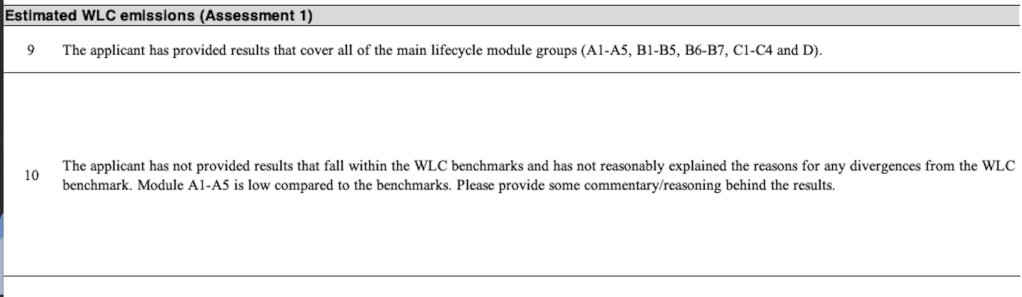
Comments from the GLA officer show a lack of proper scrutiny of the applicant’s statements about why the Module A1-A5 figure is so low.
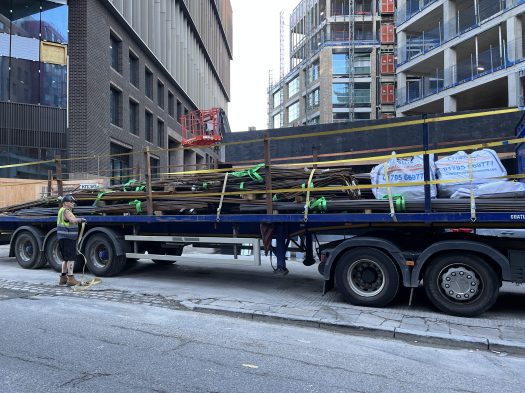
“60% GGBS concrete, 100% recycled Rebar and Lime mortar” are extremely unlikely.